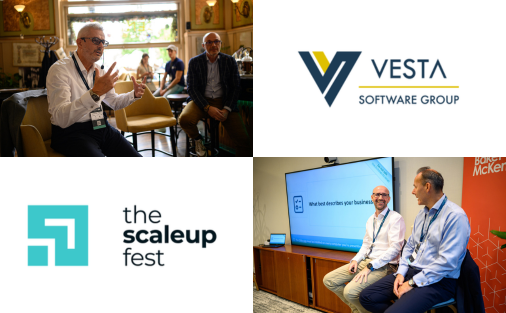
Following ScaleupFest 2026 in Budapest, we spoke with @Russell Armstrong, Investment Director at Vesta, about what stood out from the event, why relationships matter in M&A and what we look for in software businesses across Hungary and CEE.
Looking back at ScaleupFest 2026, what stood out to you most about the event and the conversations you had?
The quality and openness of the conversations. ScaleupFest brought together founders, investors, advisers and business leaders from across Hungary and the wider CEE region, and there was a real willingness to share experiences and discuss both the opportunities and challenges of building businesses here.
For us, it was particularly valuable to spend time with founders and hear directly about their ambitions, the decisions they are facing and how they think about the long-term future of their companies. Those conversations are incredibly important to us and reinforced our enthusiasm for the region.
Vesta supported ScaleupFest as an official partner this year. What made this particular event, and its focus on the CEE business community, a good fit for us?
ScaleupFest is a natural fit for Vesta because it brings together exactly the kind of entrepreneurial community we want to be part of for the long term.
We have a growing presence in Hungary and CEE, and our approach to M&A is fundamentally relationship-driven. We don’t just want to identify businesses from a distance; we want to understand the people behind them, learn about the local market and contribute to the wider business community. Supporting ScaleupFest gave us an opportunity to do exactly that.
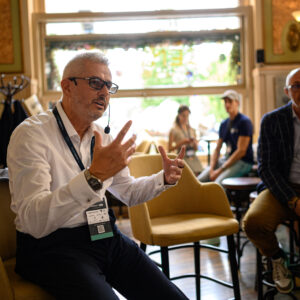
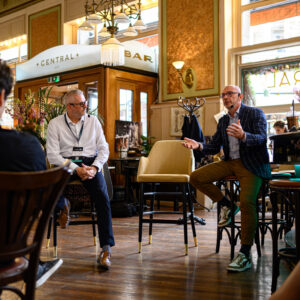
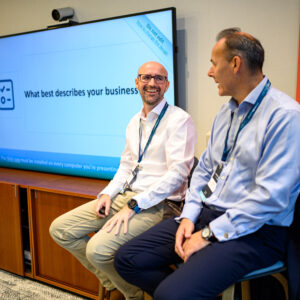
Your session explored Vesta’s experience of acquiring in Hungary and CEE. What was the main message you wanted people to take away?
The main message was that we see significant long-term potential in Hungary and across CEE, particularly within vertical market software.
We also wanted to demonstrate that there is more than one path available to founders considering the future of their business. Vesta’s model is to acquire strong software businesses with the intention of holding them permanently. We want the companies that join us to continue building on what made them successful in the first place, rather than imposing a short-term exit timetable.
M&A is built on relationships. Why is spending time face to face with founders, advisers and others in the local business community so important?
An acquisition is a significant decision, particularly for a founder who may have spent decades building their company. Trust isn’t established through a spreadsheet or a single meeting.
Spending time face to face gives both sides the opportunity to understand each other properly. For us, that means learning about the history of the business, its people, customers and culture, as well as understanding what the owner wants for its future. Equally, founders have the opportunity to understand who Vesta is, how we operate and what life as part of the group could look like.
That relationship-building takes time, and we believe it is time well spent.
What first attracted Vesta to Hungary and the wider CEE region, and what have we learned since making our first acquisition there?
We were initially attracted by the depth of entrepreneurial and technical talent across the region. Hungary and the wider CEE market have produced many highly specialised software businesses that have built strong positions in the industries they serve.
Since entering the region, one of the things we’ve learned is just how important it is to approach each market on its own terms. CEE isn’t one homogeneous market. Each country has its own business culture, networks and ways of working. Having a local presence, investing time in relationships and listening to founders and advisers has therefore been central to how we’ve developed our approach.
What do the businesses that are already part of Vesta in the region have in common, and what made them a good fit for the group?
While each business has its own story, the common thread is that they are strong vertical market software companies with deep expertise in the industries they serve. They have established customer relationships, talented teams and products that play an important role in their customers’ day-to-day operations.
Those are qualities we value highly. We’re interested in businesses with strong foundations that can continue to develop over many years, rather than businesses we need to fundamentally reshape after acquisition.
What characteristics does Vesta look for in a vertical market software business in Hungary and CEE?
We look for established vertical market software businesses that understand their customers exceptionally well and occupy a strong position within their particular niche.
Recurring revenues and healthy financial fundamentals are important, of course, but we’re equally interested in the quality of the product, the durability of customer relationships and the depth of sector expertise within the organisation.
Ultimately, we’re looking for businesses with strong foundations and the potential to keep developing over the long term.
Beyond the financial metrics, how important are the leadership team, company culture, customer relationships and market reputation when assessing a potential acquisition?
They’re hugely important. Financial performance tells you part of the story, but it doesn’t tell you everything that makes a business successful.
A strong management team, a healthy culture, long-standing customer relationships and a good reputation within a particular market can take many years to build. They’re often among the most valuable qualities a company has.
Because our intention is to own businesses permanently, we’re thinking about what will enable a company to remain successful over the next decade and beyond. The people, relationships and knowledge within the business are fundamental to that.
Vesta acquires businesses to hold them permanently while allowing them to retain their identity and operational autonomy. Why might that approach appeal to founders in the region?
For many founders, selling a business isn’t simply a financial transaction. They’ve often spent a significant part of their careers building the company, developing its culture and establishing relationships with employees and customers. Understandably, they care deeply about what happens next.
Our permanent ownership model can offer a different kind of next chapter. There isn’t a predetermined timetable to sell the business again, and we don’t believe successful companies need to lose the identity and entrepreneurial qualities that made them successful.
For a founder thinking about succession or looking for a long-term home for their company, that combination of permanence and autonomy can be very important. Providing legacy to the business and core branding they have created and built today.
What are Vesta’s ambitions for Hungary and CEE, and what would you say to a software business owner considering the next chapter for their company?
Our ambition is to continue building our presence in Hungary and across CEE over the long term. We’re excited by the quality of software businesses in the region and want to continue meeting founders, management teams and advisers and developing those relationships.
For an owner considering what comes next, we’d encourage them to start conversations early. Selling a company is a major decision, and understanding the different options available shouldn’t begin only when you’re ready to transact.
We’re always happy to have an informal conversation, learn about a business and hear what an owner wants for its future. There doesn’t need to be a transaction on the immediate horizon. The best relationships in M&A are often built long before a deal is ever discussed.
Interested in joining Vesta?
If you own or advise a vertical market software business in Hungary or elsewhere in CEE and would like to learn more about becoming part of Vesta, please get in touch.